
9 CMMC Prep Mistakes to Fix Before an Assessment
Preparing for a CMMC assessment involves more than reviewing requirements, checking boxes, and...

Hiring a CMMC consultant is an important step toward meeting your CMMC requirements. But hiring a consultant doesn't automatically mean your organization is getting the support it needs to prepare for an assessment.
So how can you tell if your CMMC compliance consulting engagement is actually focused on readiness?
Look at what the engagement helps you understand, produce, and accomplish. A readiness-focused consultant gives you a clear picture of where you stand, what needs to change, and what remains before you're assessment ready.
If you're still choosing a consulting partner, start with our guide to 8 Questions to Ask a CMMC Consulting Partner. If you've already hired one, the following signs can help you evaluate whether the work is moving you toward CMMC assessment readiness.
They validate remediation instead of simply marking items complete.
They give you a clear view of what remains before assessment.
Readiness starts with knowing where you stand.
A consultant shouldn't assume that every defense contractor is starting from the same place. Your existing security program, systems, processes, documentation, and experience with compliance all affect the work required to prepare for CMMC.
A readiness-focused engagement evaluates your current environment against the CMMC requirements that apply to your organization.
That can include looking at:
How security practices are currently implemented
Where FCI or CUI is handled and stored
Systems and assets that fall within scope
Existing policies and procedures
Current documentation and records
Technical and administrative safeguards
Evidence supporting implemented practices
The purpose isn't to find fault with everything you're doing. It's to establish a realistic baseline.
A useful assessment answers questions such as:
Which requirements are already addressed? Where are the gaps? Which areas need more evidence or documentation? And where does remediation need to begin?
A readiness-focused consultant won’t stop at identifying a gap.
For each significant finding, your team should understand what requirement it relates to, what's missing, and what needs to happen to address it.
For example, saying that an organization needs stronger access control doesn't give the team much direction. A useful readiness-focused partner provides context around the applicable requirement, the current implementation, the gap, and the work needed to address it.
That connection matters because CMMC assessment readiness isn't only about having cybersecurity practices. Your organization needs to be able to demonstrate how those practices are implemented.
Your readiness-focused consultant helps connect the dots between:
CMMC requirement → current implementation → identified gap → remediation → supporting evidence
That gives your team a much clearer understanding of what the work is intended to accomplish.
For a broader look at the steps involved in CMMC preparation, see How to Prepare for CMMC in 2026: A Defense Contractor's Complete Guide.
This is one of the most important distinctions between general cybersecurity consulting and readiness-focused CMMC compliance consulting.
A control can be implemented without your organization being fully prepared to demonstrate that implementation.
That's why a readiness-focused consultant asks more than:
Is this security practice in place?
They should ask:
How do you know it's being followed? What documentation supports it? What evidence can you produce? Does that evidence reflect your current environment?
Depending on the requirement and your environment, this could involve reviewing:
Policies and procedures
System configurations
Records
Training documentation
Access reviews
Logs
Other relevant artifacts
The goal is to determine whether the documentation, implementation, and evidence tell a consistent story.
For example, your policy may require a certain process, but your procedures may not explain how the process is carried out. Or the procedure may describe a process that your team isn't actually following.
Those disconnects matter when preparing for an assessment.
A readiness-focused engagement helps identify those disconnects before they become a larger problem during assessment preparation.
A gap assessment can tell you what's missing. It doesn't automatically tell you how to get from your current state to readiness.
That's where remediation planning becomes important.
A readiness-focused consultant helps your organization turn findings into specific, actionable work. That can include identifying the steps needed to address a gap, determining who needs to be involved, identifying dependencies, and establishing priorities.
Not every item will have the same level of urgency or require the same amount of effort.
For example:
One gap might require a policy update.
Another might require a technical configuration change.
Another could involve implementing a new process and generating evidence over time.
Your remediation plan helps distinguish between those types of work rather than treating every finding as another checkbox.
At a minimum, your team should be able to answer:
What needs to change?
Who is responsible?
What documentation needs to be updated?
What evidence will support the remediation?
What needs to happen before the item can be considered addressed?
Organizations like RAMPQuest help turn assessment findings into prioritized remediation work, so internal teams can see what needs to happen, who needs to be involved, and what evidence will demonstrate that the gap has been addressed.
This is especially valuable for defense contractors balancing DoD contractor compliance with limited internal resources.
Closing a remediation item on a spreadsheet doesn't necessarily mean the underlying issue is resolved.
A readiness-focused consultant revisits important findings after remediation to determine whether the change actually addressed the gap.
That review might involve checking whether:
The updated practice is being followed
Policies and procedures reflect the change
Technical configurations match the documented process
Records or evidence are being generated
Employees understand their responsibilities
The original finding has been fully addressed
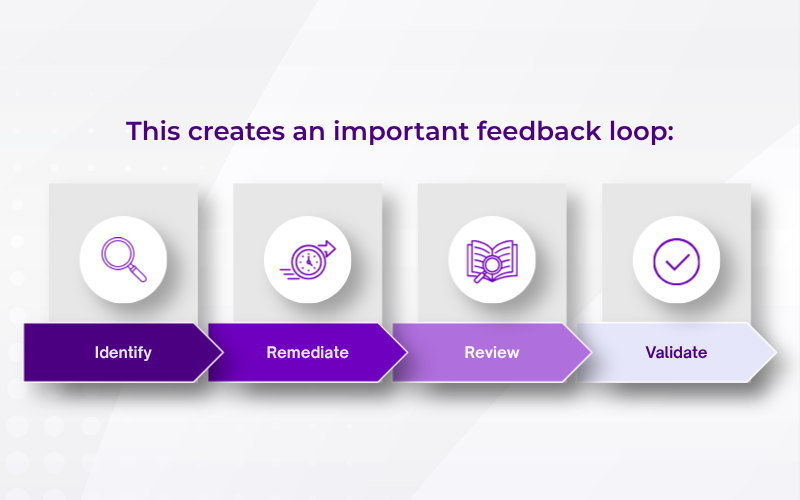
That process can uncover secondary issues before they become assessment problems.
For example, an organization might implement a new security process and update its policy, but fail to establish a way to consistently document that the process is being performed.
From a readiness perspective, the work isn't necessarily finished.
Validation helps confirm that the remediation addressed the underlying issue, not just the item recorded in the tracking system.
Perhaps the most useful sign of a readiness-focused engagement is that uncertainty decreases as the work progresses.
You should be able to see how your organization is moving from its initial baseline toward assessment readiness.
That doesn't mean your consultant should promise a specific assessment outcome. The eventual assessment is a separate process performed by the appropriate assessment organization.
Instead, your consultant should help you understand your own preparedness.
That includes visibility into:
Requirements that have been addressed
Open gaps and remediation items
Documentation that still needs attention
Evidence that needs to be collected or strengthened
Areas requiring additional validation
Remaining preparation activities
The closer you get to assessment, the more specific that picture becomes.
You shouldn't have to rely on general reassurance that you're "ready." You should have the information needed to understand why your organization is or isn't ready to move forward.
A readiness-focused CMMC compliance consulting engagement leaves you with more than a checklist or a collection of recommendations.
You should have:
A baseline: A clear understanding of your current security posture.
A gap picture: A defined view of what needs attention.
A remediation plan: A practical path for addressing those gaps.
Supporting evidence: Documentation and evidence that align with your actual practices.
A readiness view: A clear understanding of what remains before assessment.
That's the difference between consulting that simply explains CMMC and consulting that's built around readiness.
The work moves your organization toward demonstrating that security practices are implemented, documented, and supported by evidence.
RAMPQuest helps defense contractors prepare for CMMC through readiness-focused consulting, including gap assessments, documentation and evidence review, remediation planning, and ongoing guidance.
We support organizations through the preparation process while keeping the focus on building a security program that can stand up to assessment.
If you’re interested in talking to an advisor, click the link below. We’re here to help.
