
CMMC Level 2 Readiness, Made Clear

Most organizations don't struggle with CMMC because of missing controls. They struggle because they don't have a clear starting point.

With Progressing Pathways, you get:   

   A same day estimate for your CMMC readiness journey
   Prioritized recommendations based on your environment
   Clear steps so you know what to do next

How the Progressing Pathways Program Works

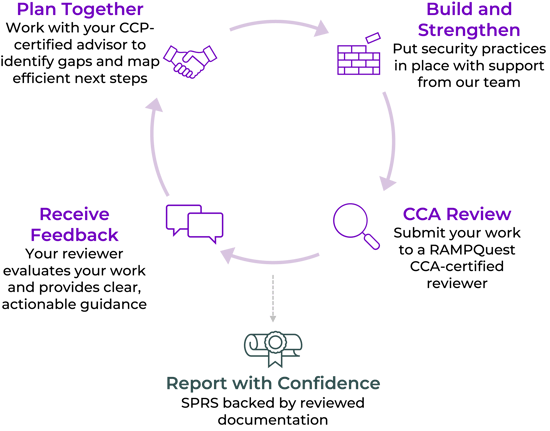
Progressing Pathways is a structured readiness program that helps DoD contractors understand where they stand with CMMC and what to do next.

It starts by mapping your current environment against CMMC Level 2 expectations, then identifies common gaps across scope, documentation, and system boundaries.

From there, it translates findings into a clear sequence of next steps so teams know what to prioritize and in what order.

The goal is simple: reduce uncertainty, focus effort where it matters most, and improve readiness for upcoming contract requirements.

RQ_Progressing_Snapshot_Cycle_Transparent

CMMC Level 2 Is Now a Requirement

As of October 31, 2026, CMMC will be required for all new DoD contract awards, with full integration across all contracts by November 10, 2028

More than an audit requirement, it shows the DoD that your organization can protect CUI with strong, repeatable cybersecurity practices.

Investing in readiness now helps you stay competitive, strengthen your security posture, and reduce cyber risk.

Contract Eligibility

CMMC Level 2 is required to compete for most DoD contracts involving CUI and maintain eligibility for new awards. 

Competitive Advantage

Builds trust with primes and subcontractors improving rates and strengthening partner relationships.

Security Resilience

Strengthens protection, response, and recovery reducing risk and improving incident readiness. 

What You Walk Away With

Progressing Pathways Program Outputs

Readiness Map
Readiness Map

A clear view of where you are today and what needs to happen next. 

This breaks down your current cybersecurity and compliance posture into a simple progression path so you can see what matters now, what comes next, and what is standing in the way. 

It is less about reporting and more about helping you move forward with confidence. 

The_Official_Program_Management_Office_for_StateRAMP-1
Program Maturity & Risk Profile

A straightforward look at how your current program is performing across key areas. 

This highlights: 

  • Where your program is strong

  • Where gaps may create risk or slow progress

  • Where attention is needed to support compliance goals. 

Progressing Pathways web
Prioritized Progression Plan

A step-by-step plan that shows what to tackle first and why. This helps you focus on the work that actually reduces risk and moves your program forward instead of trying to fix everything at once. 

It includes near-term actions, mid-term priorities, and longer-term improvements. 

 

Comprehensive_Gap_Analysis
Governance and Control Alignment Summary

A simplified view of how your environment aligns with expected cybersecurity requirements, along with clarity on ownership. 

It helps answer two key questions: what is in place today, and who is responsible for keeping it moving forward. 

CMMCLevel2Consultant_ProgressingPathways
Executive Readiness Brief

A short, leadership-ready summary that answers a simple question: are we ready to move forward, and what will it take? 

It outlines current readiness, key blockers, and what leadership should expect in terms of effort and focus. 

Comprehensive_Gap_Analysis
Comprehensive Gap Analysis

We begin by conducting a thorough assessment of your current security posture against CMMC requirements. This analysis identifies areas needing improvement and provides a clear roadmap for achieving compliance.

CMMCLevel2RequirementsConsultant_ProgressingPathways

A clear view of where you are today and what needs to happen next. 

This breaks down your current cybersecurity and compliance posture into a simple progression path so you can see what matters now, what comes next, and what is standing in the way. 

It is less about reporting and more about helping you move forward with confidence. 

The_Official_Program_Management_Office_for_StateRAMP-1

A straightforward look at how your current program is performing across key areas. 

This highlights: 

  • Where your program is strong

  • Where gaps may create risk or slow progress

  • Where attention is needed to support compliance goals. 

Progressing Pathways web

A step-by-step plan that shows what to tackle first and why. This helps you focus on the work that actually reduces risk and moves your program forward instead of trying to fix everything at once. 

It includes near-term actions, mid-term priorities, and longer-term improvements. 


Comprehensive_Gap_Analysis

A simplified view of how your environment aligns with expected cybersecurity requirements, along with clarity on ownership. 

It helps answer two key questions: what is in place today, and who is responsible for keeping it moving forward. 

CMMCLevel2Consultant_ProgressingPathways

A short, leadership-ready summary that answers a simple question: are we ready to move forward, and what will it take? 

It outlines current readiness, key blockers, and what leadership should expect in terms of effort and focus. 

Comprehensive_Gap_Analysis

We begin by conducting a thorough assessment of your current security posture against CMMC requirements. This analysis identifies areas needing improvement and provides a clear roadmap for achieving compliance.

CMMCLevel2RequirementsConsultant_ProgressingPathways

Why Choose RAMPQuest for CMMC Readiness

RAMPQuest brings real-world experience supporting government cybersecurity programs. It is the Program Management Office (PMO) for GovRAMP, supporting organizations as they navigate a government cybersecurity framework.

As the GovRAMP NIST PMO:

  We understand how cybersecurity frameworks are applied in practice.

  We know where organizations typically struggle.

  We focus on what Certified Third- Party Assessor Organizations (C3PAOs) expect to see during evaluation.
RPO-badge-WEBP

Start Building Your CMMC Plan with Confidence.

 Get a clear view of your current CMMC posture, identify gaps, and understand exactly what to prioritize next. Progressing Pathways helps you move forward in structured phases, reducing risk, avoiding rework, and aligning readiness with real contract demands. 

What_does_it_Mean_to_be_GovRAMP_Compliant

Frequently Asked Questions

How much does Progressing Pathways cost?

 Progressing Pathways is $2,000 per month and includes ongoing advisory support, continuous access to our team for questions, and quarterly readiness assessments from certified professionals.  

What does "monthly advisor support" include?

 Each month, you’ll meet with a CCP-certified advisor to review progress, address challenges, and align on next steps. Between sessions, your team can reach out with questions as they arise so you can keep moving without delays.  

How long does it take to become CMMC compliant?

There’s no one-size-fits-all timeline. It depends on your current environment, existing controls, and internal resources.

Progressing Pathways is designed to meet you where you are and help you move forward at a pace that aligns with your business goals. If you need to accelerate, additional support options are available.

Do we need to be fully prepared before starting?

 No. Most organizations begin without a clear understanding of their readiness. That’s exactly where Progressing Pathways provides the most value.  

What makes this different from a gap assessment?

A gap assessment gives you a snapshot in time, but often requires internal resources to fully assess CUI systems. Progressing Pathways gives you a structured path forward, one phase at a time, with ongoing support to close gaps and stay aligned with CMMC requirements. 

What is a CMMC readiness assessment?

Before assessing controls, we start by defining your environment:

  • Identify where CUI and FCI live.
  • Determine who accesses them and how they flow across systems.
  • Map your network boundaries, third-party integrations, and vendor dependencies.

Network discovery tools, data classification scans, and system boundary diagrams help identify unprotected repositories of sensitive data.

What's the difference between NIST 800-171 and CMMC?

NIST SP 800-171 provides cybersecurity requirements for protecting CUI, whereas CMMS adds a certification process and maturity levels to enforce compliance across the DoD supply chain. 

Can small businesses achieve CMMC Level 2?

Yes. CMMC Level 2 is essential for small business working with the DoD, focusing on safeguarding CUI and ensuring compliance with cybersecurity standards. RAMPQuest is perfectly positioned to help businesses of all sizes achieve CMMC Level 2 compliance. 

Do I need a CMMC consultant?

Not always, but most organizations benefit from expert guidance to avoid delays, missteps, and gaps that can impact assessment outcomes.

A strong CMMC partner should:
• Have proven experience across the Defense Industrial Base
• Communicate clearly with both technical teams and leadership
• Provide tailored, actionable guidance, not generic checklists
• Focus on education, transparency, and long-term success

At RAMPQuest, our team combines DoD experience, NIST expertise, and decades of consulting across regulated industries to help you not only reach compliance, but sustain it over time.
